Maintaining Nutritional Ketosis
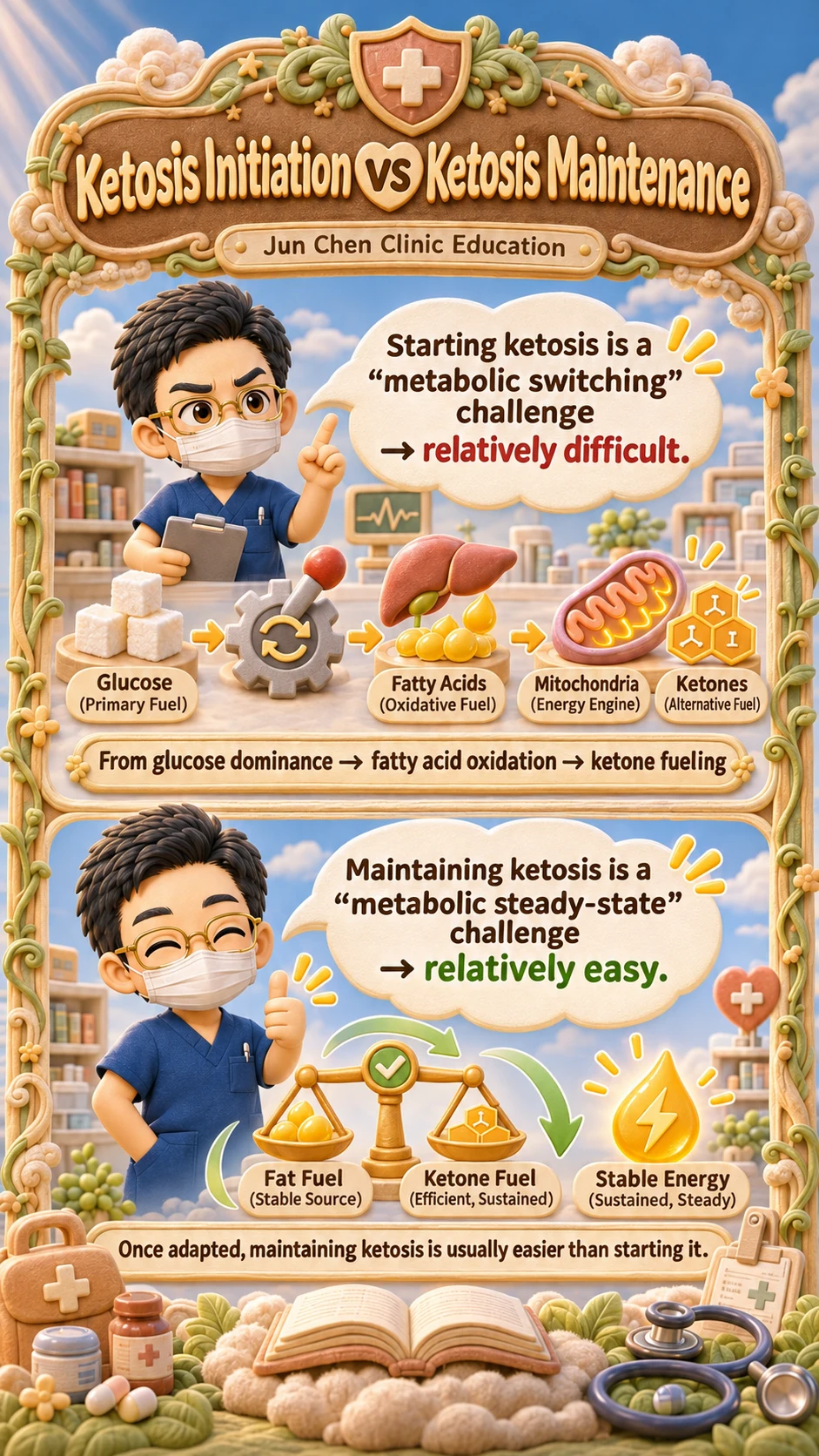
Entering ketosis involves a metabolic transition. Maintaining it involves sustaining the conditions that support ketone production. For some people, the early transition feels harder.
As carbohydrate intake falls, the body relies more on fatty acids, the liver makes more ketones, and tissues gradually adapt to using them. These processes change over time. [1]
1. Why can entering ketosis be difficult?
The body adjusts to a different fuel supply
After a diet high in carbohydrates, reducing carbohydrate intake changes insulin levels, the release of stored fat and the activity of enzymes involved in fuel use.
Fatty acid entry into mitochondria is regulated
Malonyl-CoA inhibits CPT1, a protein that helps move long-chain fatty acids into mitochondria. As insulin falls during carbohydrate restriction, this inhibition can ease, allowing more fatty acid oxidation.
Liver ketone production depends on several conditions
Burning more fat does not always raise blood ketones immediately. Ketone production depends on the fatty acids reaching the liver, the acetyl-CoA available and the hormonal environment. [1]
Glucose and fat metabolism adjust together
Enzymes such as pyruvate dehydrogenase (PDH) change activity as the fuel supply shifts. Ketosis depends on several pathways working together, so PDH activity alone cannot explain whether it begins.
2. Why might blood ketones stay low despite eating very few carbohydrates?
- Insulin levels and fat release may still be adjusting.
- Uncounted carbohydrates or frequent meals may influence ketone production.
- Blood ketones reflect both liver production and use by other tissues.
- Individual metabolism and measurement timing can affect the result.
3. Why pay attention to muscle loss during the transition?
When carbohydrate intake drops, the body makes glucose through gluconeogenesis to meet ongoing needs. If energy and protein intake are too low, the risk of losing muscle may rise. Track waist circumference alongside body weight to follow changes in abdominal size.
4. Why can maintaining ketosis feel easier?
As the body adapts, it can use more fatty acids and ketones for fuel. Ketone production and use may settle into a more stable pattern. Some people then find ketosis easier to maintain with a diet that meets their energy needs. [1]
5. Why measure blood ketones?
Eating few carbohydrates does not guarantee nutritional ketosis. Blood β-hydroxybutyrate (BHB) of at least 0.5 mmol/L is a commonly used threshold. The range 0.5–3.0 mmol/L is a reference for nutritional ketosis. Higher values need to be interpreted in clinical context. [1]
If you track blood ketones during the transition, compare readings taken at similar times and under similar conditions relative to meals.
Conclusion
Entering ketosis requires conditions that support fatty acid oxidation and ketone production. Maintaining ketosis means sustaining those conditions. Blood ketone measurements give a more direct assessment than hunger, energy levels or weight changes.
If you have diabetes, seek medical advice before starting a ketogenic diet. Insulin use can raise the risk of low blood glucose when carbohydrate intake falls. If you take an SGLT2 inhibitor, discuss the risk of ketoacidosis with your prescriber and avoid starting a ketogenic diet on your own. Nutritional ketosis and diabetic ketoacidosis are distinct metabolic states. [2]