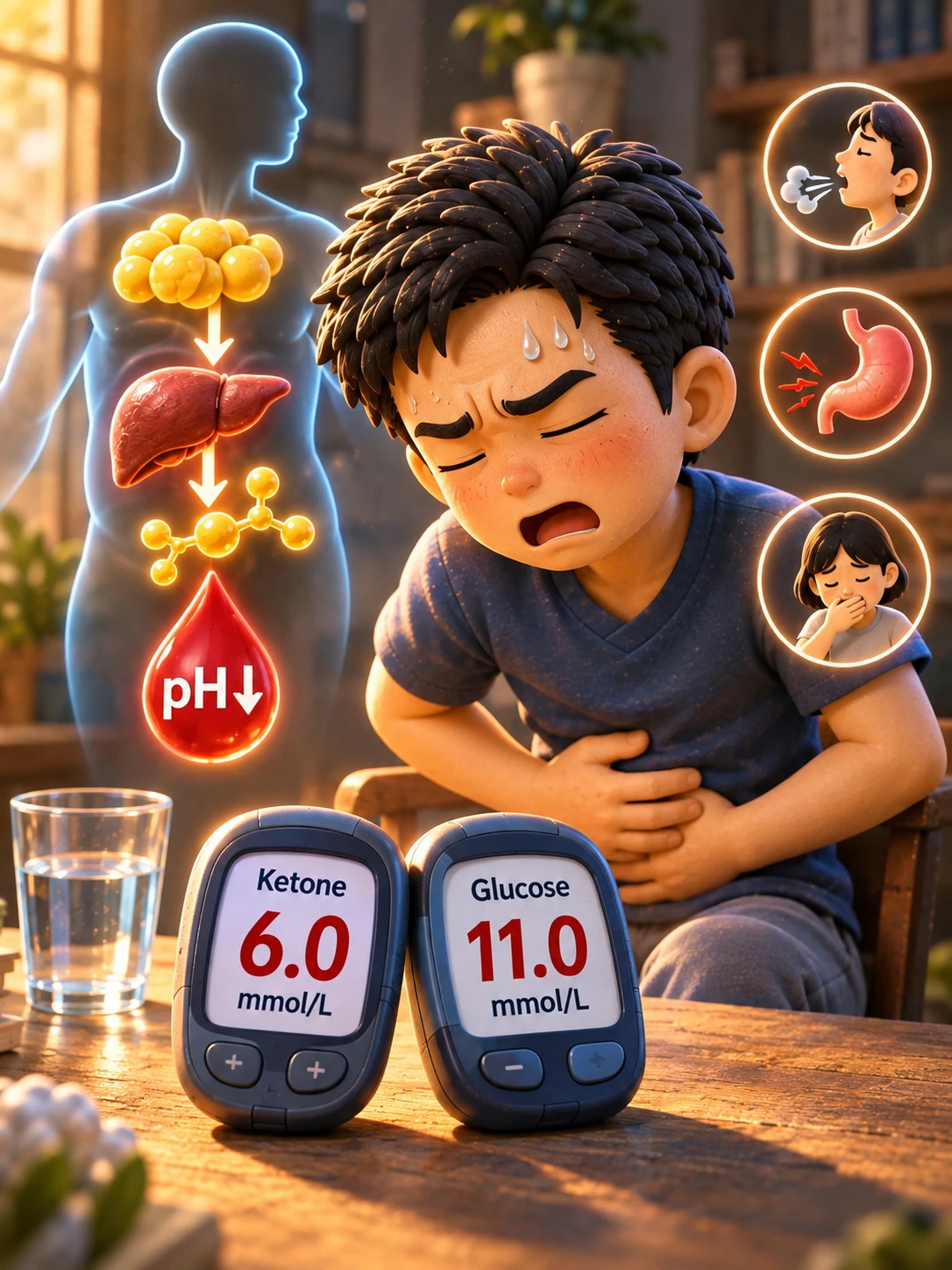
Ketoacidosis
Ketoacidosis occurs when ketones accumulate and cause metabolic acidosis. Severe cases can lead to dehydration, electrolyte disturbances, abnormal heart rhythms, impaired consciousness, circulatory failure or death. It differs from nutritional ketosis.
1. How ketoacidosis develops
The body can normally use ketones made from fat to fuel the brain, heart and other tissues. Severe insulin deficiency, increased counterregulatory hormones or other major metabolic disturbances can disrupt control of ketone production.
In diabetic ketoacidosis (DKA), insufficient insulin promotes fat breakdown. The liver produces large amounts of β-hydroxybutyrate and acetoacetate. As these acids accumulate, bicarbonate is consumed and blood pH falls. Dehydration and electrolyte disturbances can impair cellular function. Severe cases may progress to circulatory failure or coma. [1]
2. Common types and triggers
Diabetic ketoacidosis
DKA is most common in type 1 diabetes and can also occur in type 2 diabetes. [1]
- Missed, interrupted or insufficient insulin treatment.
- Infection, severe illness, surgery or trauma.
- Certain medicines, especially SGLT2 inhibitors.
- Diabetes that has not yet been diagnosed.
Alcoholic ketoacidosis
This can occur after heavy alcohol use, particularly when food intake falls, vomiting persists or drinking stops abruptly. [2]
Starvation ketoacidosis
Severe undernutrition or prolonged fasting can cause starvation ketoacidosis, especially during pregnancy, illness or other metabolic stress. Alcoholic and starvation ketoacidosis differ from DKA in their mechanisms and treatment. [2]
3. Diagnostic criteria for DKA in adults
The ADA 2026 criteria require all three components below. [1]
| Component | Criterion |
|---|---|
| Ketosis | Blood β-hydroxybutyrate ≥3.0 mmol/L |
| Diabetes or hyperglycaemia | Glucose ≥11.1 mmol/L or a prior diagnosis of diabetes |
| Metabolic acidosis | pH <7.30 and/or bicarbonate <18 mmol/L |
Ketone and glucose readings alone cannot confirm or exclude ketoacidosis. Clinical findings and acid–base tests are needed. DKA can occur below the glucose threshold, including in people taking SGLT2 inhibitors. [1]
4. Common symptoms
- Thirst, frequent urination and marked dehydration.
- Nausea, vomiting and abdominal pain.
- Deep, rapid breathing (Kussmaul breathing).
- Fruity or acetone-like breath.
- Severe fatigue, weakness or drowsiness.
- Confusion or coma in severe cases.
Symptoms can worsen within hours to days. [3]
5. When to seek emergency care
Seek emergency assessment immediately for persistent vomiting, marked abdominal pain, deep and rapid breathing, severe dehydration or altered consciousness, especially if ketones are elevated. Do not wait for a ketone test if severe symptoms are present. [3]
Hospital treatment for DKA typically includes intravenous fluids, insulin, monitoring and correction of electrolytes, and treatment of the underlying trigger. [1]
References
- American Diabetes Association Professional Practice Committee for Diabetes. Diabetes Care in the Hospital: Standards of Care in Diabetes—2026. Diabetes Care. 2026;49(Suppl 1):S339–S355.
- Ghimire P, Dhamoon AS. Ketoacidosis. StatPearls. Updated 2023.
- Centers for Disease Control and Prevention. Diabetic Ketoacidosis.