Entering Nutritional Ketosis
A ketogenic diet is low in carbohydrates, moderate in protein and high in fat. Restricting carbohydrates increases fat oxidation and liver ketone production, helping the body enter and maintain nutritional ketosis. [1]
1. Macronutrient ratios
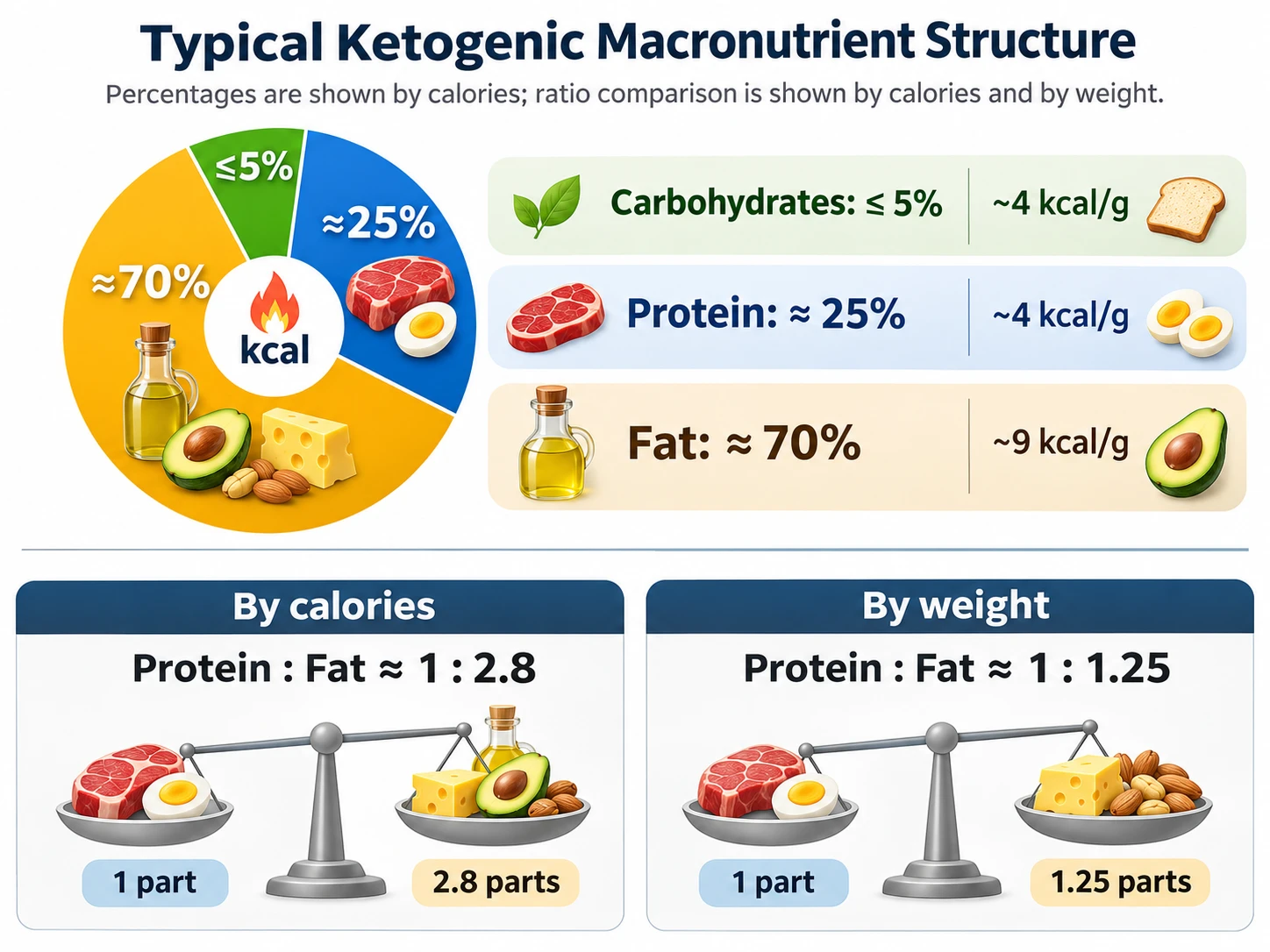
A common macronutrient breakdown for a modern ketogenic diet, based on total daily energy:
- Carbohydrates: ≤5%, 4 kcal/g
- Protein: about 25%, 4 kcal/g
- Fat: about 70%, 9 kcal/g
Using the 70/25/5 breakdown:
Energy ratio (protein : fat) ≈ 1 : 2.8
Weight ratio (protein : fat) ≈ 1 : 1.25
A therapeutic ketogenic diet may use a 4:1 ratio by weight of fat to protein and carbohydrates combined. [2]
2. Entering and maintaining ketosis
In my clinical experience, some people who have adapted to a ketogenic diet can maintain ketosis with the ratios above. The same ratios may produce little measurable ketone production at first in someone who has yet to enter ketosis.
Ketone production depends on absolute carbohydrate intake, insulin levels, liver glycogen stores, activity and individual metabolism. Long-standing high carbohydrate intake, insulin resistance, high insulin levels, excess visceral fat and metabolic syndrome are relevant factors to consider. [1]
Insulin suppresses fat breakdown and ketone production. Some people may need a lower carbohydrate intake during the transition. People with insulin resistance can still enter nutritional ketosis. [1]
3. Daily carbohydrate intake in grams
Some ketogenic approaches use less than 20 g of carbohydrate per day during the initial phase. The amount needed varies from person to person. [1]
- Eat enough protein to meet your needs.
- Adjust fat intake to energy needs and satiety.
- Use blood β-hydroxybutyrate (BHB) to assess ketosis. Weight loss, hunger and how you feel give limited information about ketone levels.
Blood BHB of at least 0.5 mmol/L is a commonly used threshold. Values of 0.5–3.0 mmol/L are often cited as a reference range for nutritional ketosis. [1]
4. My clinical perspective
Entering ketosis
Focus on carbohydrate intake in grams while getting adequate protein and enough fat to meet energy needs. This supports a shift toward greater use of fats and ketones for energy.
Maintaining ketosis
Once ketosis is stable, adjust the balance of carbohydrates, protein and fat gradually based on blood ketones, health, activity and other metabolic markers. Ketosis may appear within days, while adaptation to using more fat can take longer. [1]
Use objective measurements to assess how the diet is working for you. Interpret blood ketones alongside your health, activity and other metabolic markers.
If you have diabetes, liver or kidney disease, abnormal blood lipids or take glucose-lowering medication, seek medical assessment before starting. If you take an SGLT2 inhibitor, avoid starting a ketogenic diet on your own because of the risk of ketoacidosis. [3]