Dawn Phenomenon
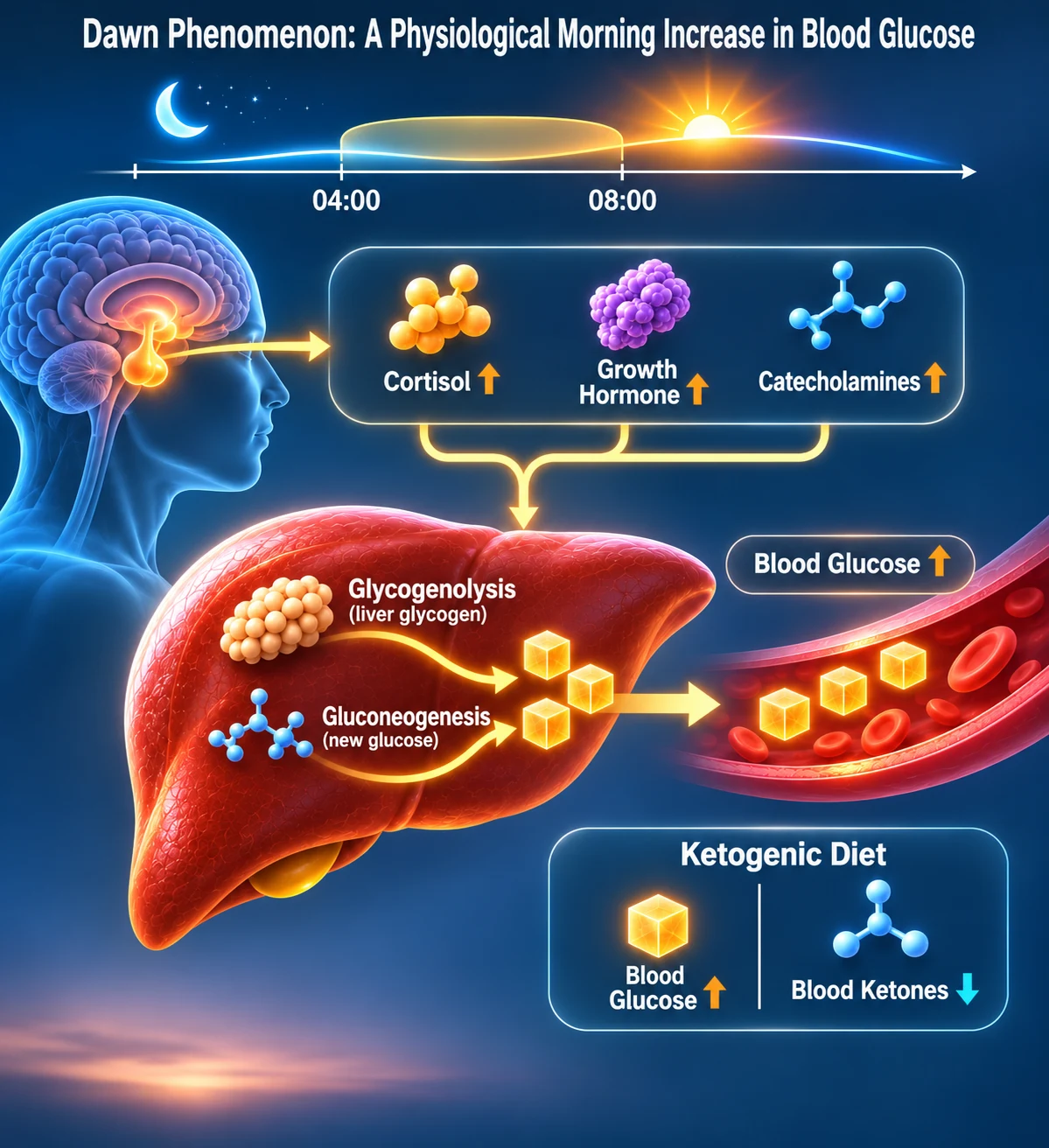
The dawn phenomenon is an early-morning process in which circadian rhythms and glucose-raising hormones increase the liver’s glucose output. Blood glucose may rise temporarily. [1]
Two important physiological processes
- Dawn phenomenon. This usually occurs at approximately 4:00–8:00 a.m. It is mainly influenced by circadian rhythms and may begin before waking and continue afterwards. [1]
- Cortisol awakening response (CAR). Cortisol usually rises further during the first 30–45 minutes after waking, then gradually declines. [2]
Metabolic mechanism
Hormonal changes → increased liver glycogen breakdown and gluconeogenesis → increased endogenous glucose supply → energy for morning activity. [1]
For people following a ketogenic diet, a morning rise in blood glucose may be accompanied by a temporary fall in blood ketones.
Measuring your morning pattern
To observe your own morning metabolic changes, you can take a measurement one hour after waking. Remain fasting during this period and avoid coffee and exercise, which may affect the readings.
References
- American Diabetes Association. High Morning Blood Glucose: Understanding and Management.
- Stalder T, et al. The Cortisol Awakening Response: Regulation and Functional Significance. Endocrine Reviews. 2025;46(1):43–59.