The Calf Is the Body’s Second Heart
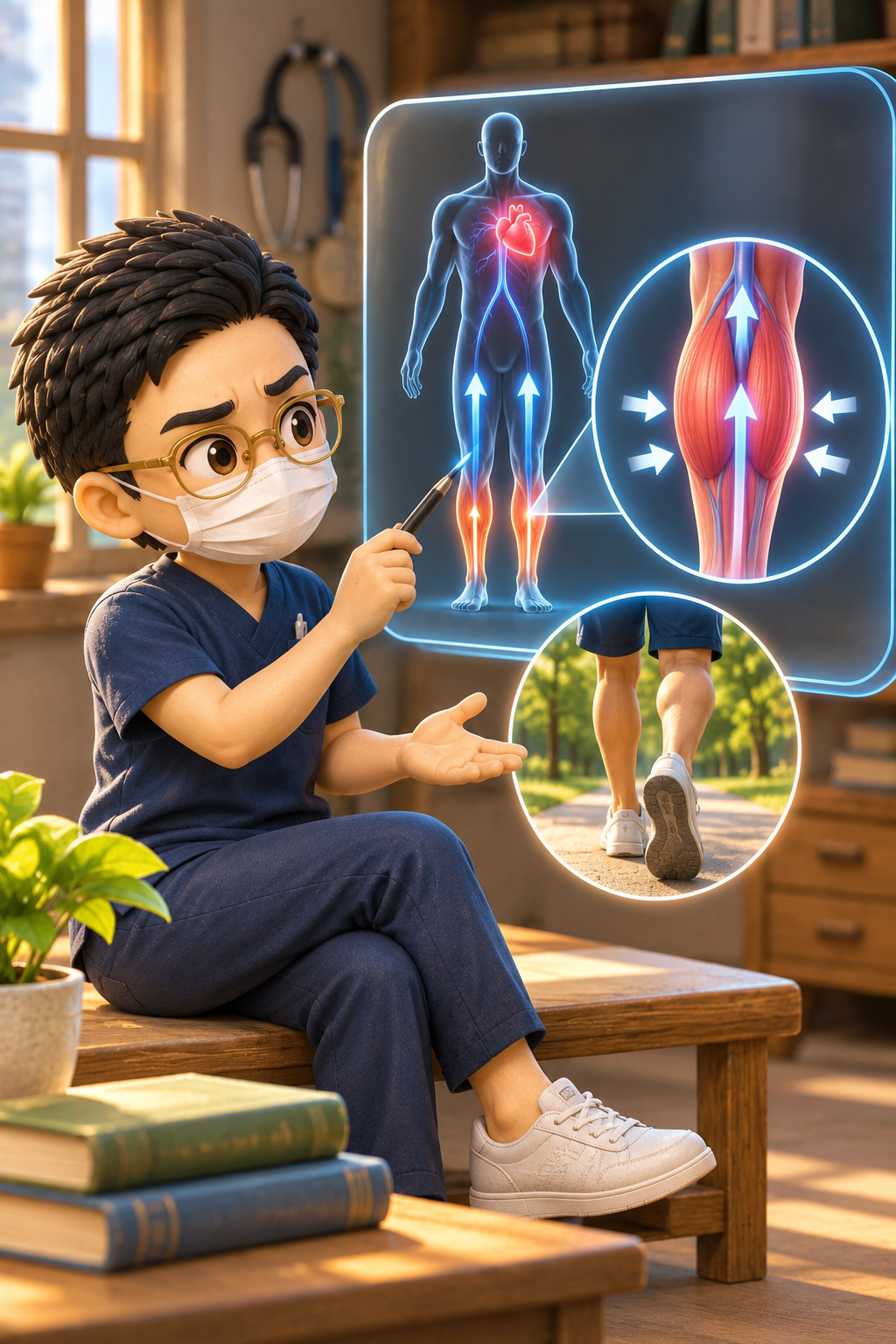
The heart pumps blood throughout the body, while the calf muscles help venous blood from the lower limbs overcome gravity and return to the heart. This is why the calf muscle pump is often called the body’s “second heart.” [1]
1. The Calf Muscle Pump
The back of the lower leg consists mainly of the gastrocnemius and soleus muscles.
When the calf muscles contract, they compress the deep veins and push blood towards the heart. When the muscles relax, the veins refill. Venous valves limit the backward flow of blood. [1]
These rhythmic contractions and relaxations form the calf muscle pump, an important mechanism for venous return from the lower limbs. [1]
2. The Risks of Prolonged Sitting and Standing
Sitting for long periods or standing still reduces the rhythmic contractions of the calf muscles. This makes venous return less efficient and allows blood to pool more easily in the lower limbs. [1] [2] [4]
This may cause or worsen:
- Fatigue and a feeling of heaviness in the lower limbs [2]
- Swelling of the calves and ankles [2]
- Symptoms associated with varicose veins [3]
- Chronic venous insufficiency [5]
- The risk of deep vein thrombosis, especially during prolonged immobilisation [4]
Standing is not the same as moving. What matters is the rhythmic contraction and relaxation of the muscles. Even a simple walk can activate the calf muscle pump and promote venous return from the lower limbs. [1]
References
- The human lower leg muscle pump functions as a flow diverter pump, maintaining low ambulatory venous pressures during locomotion
- Physiological changes during prolonged standing and walking considering age, gender and standing work experience
- Prolonged standing at work and hospitalisation due to varicose veins
- CDC Yellow Book: Deep Vein Thrombosis and Pulmonary Embolism
- Journal of Vascular Surgery: Hemodynamics and diagnosis of venous disease